

Bari, Italy, 16 January 2026
The CIHEAM Bari concluded the 21st edition of the International Cooperation Days with a conference dedicated to Humanitarian and Science Diplomacy in the 21st Century, bringing together institutional leaders, diplomats, representatives of international and humanitarian organisations, as well as scientific and academic experts. The event aimed to strengthen dialogue between humanitarian diplomacy and scientific cooperation at a time when global crises are multiplying and traditional political and multilateral channels are increasingly disrupted.
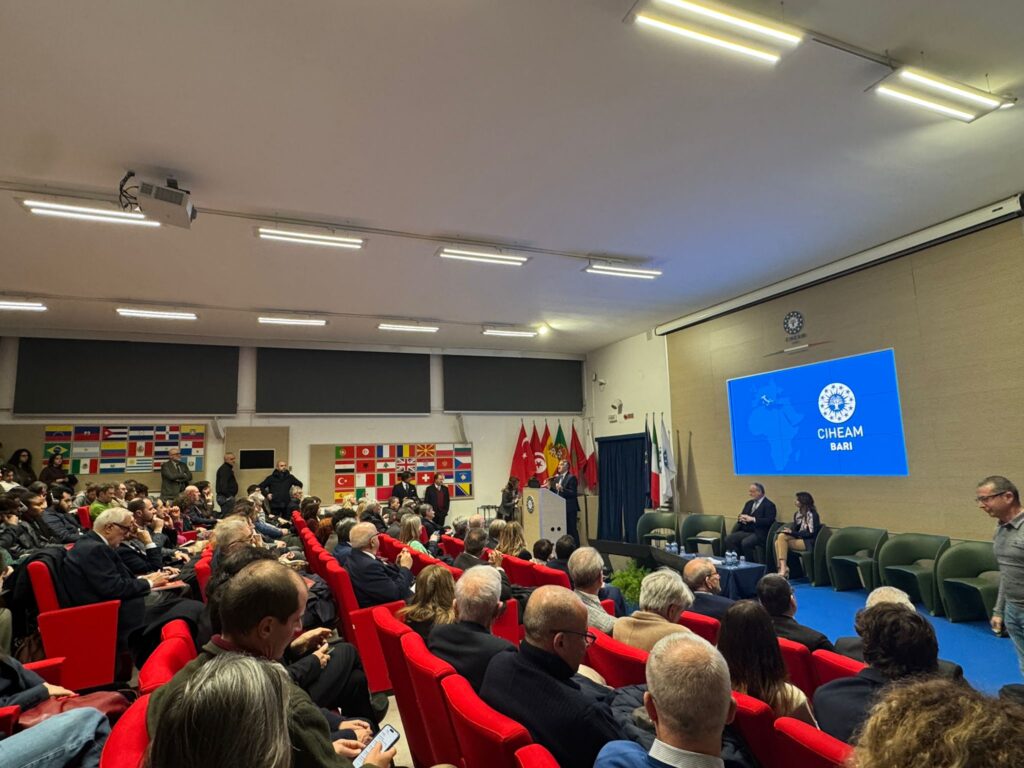
The conference was officially opened by Biagio Di Terlizzi, Director of the CIHEAM Bari, followed by institutional greetings by Teodoro Miano, Secretary General of the CIHEAM, together with Vito Leccese, Mayor of the Metropolitan City of Bari, Antonio Decaro, President of the Apulia Region, and Ioana Gheorghias, Consul General of Romania and Dean of the Consular Corps.
In his address, Teodoro Miano underlined the strategic relevance of a diplomacy capable of connecting solidarity with knowledge, particularly in contexts where crises (whether humanitarian, climatic or geopolitical) make sustained dialogue between States more difficult. He recalled that humanitarian diplomacy seeks to mobilise decision-makers in the interest of vulnerable populations, in line with the principles of neutrality, impartiality and independence. Science diplomacy, in turn, draws on the universal language of evidence and data, enabling cooperation between institutions even when official relations are tense.
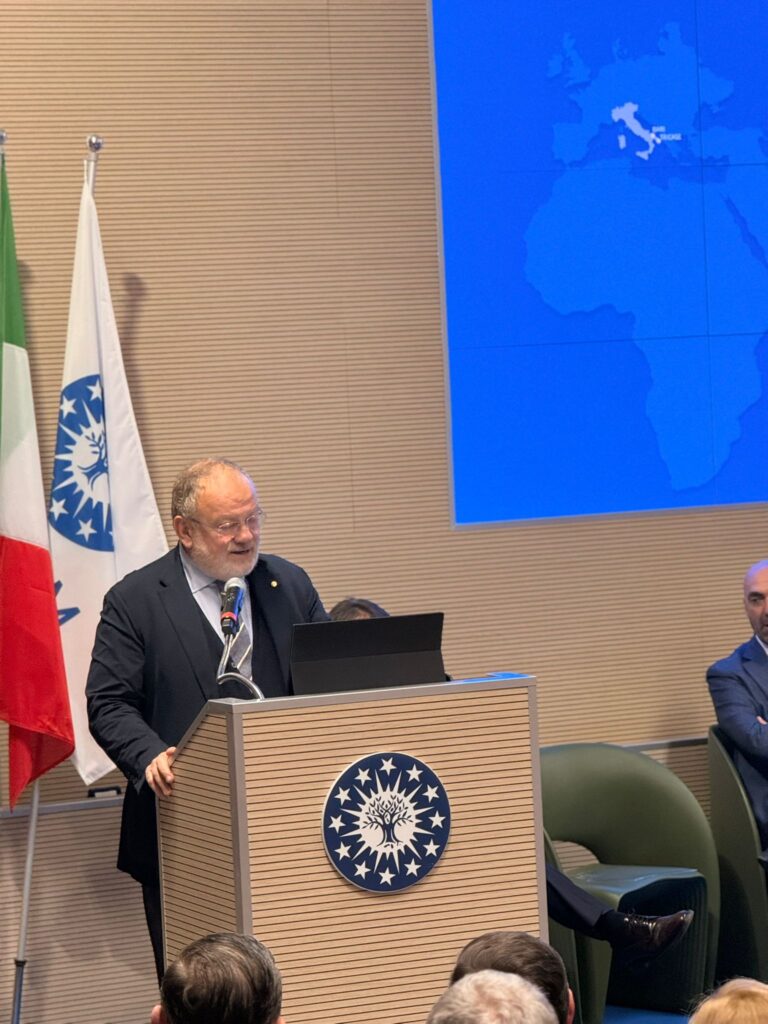
The Secretary General stressed the need for an integrated diplomatic approach, in which humanitarian and scientific dimensions strengthen one another. In this perspective, scientific information is not only a tool for understanding: it becomes a lever for action, helping to anticipate risks, establish shared baselines and support operational responses. Whether through climate monitoring, soil moisture observation, early warning systems for crop losses, or guidance for agricultural policy choices, science contributes to shaping effective and timely decision-making. He also highlighted how networks of expertise and technical cooperation can provide a form of “parallel dialogue”, supporting de-escalation and enabling collective solutions, particularly in the area of food and water resilience.
The conference formed part of the broader International Cooperation Days programme, which since 12 January brought together more than 70 professionals involved in cooperation projects implemented in multiple regions worldwide, contributing to more sustainable, equitable and inclusive development across rural and coastal systems in the Mediterranean, Africa and the Middle East.
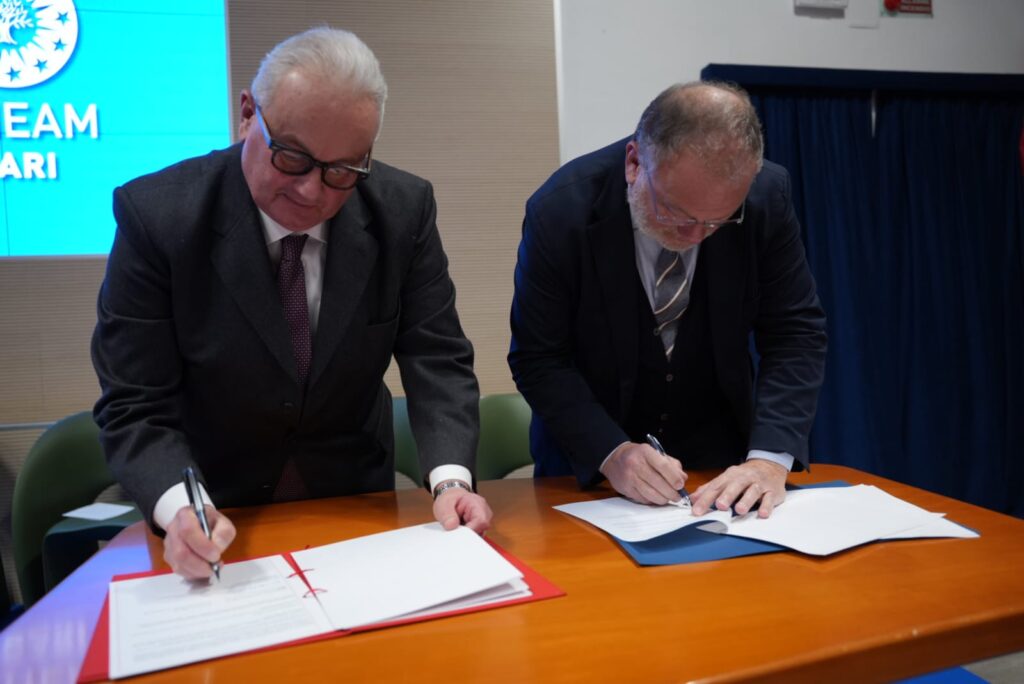
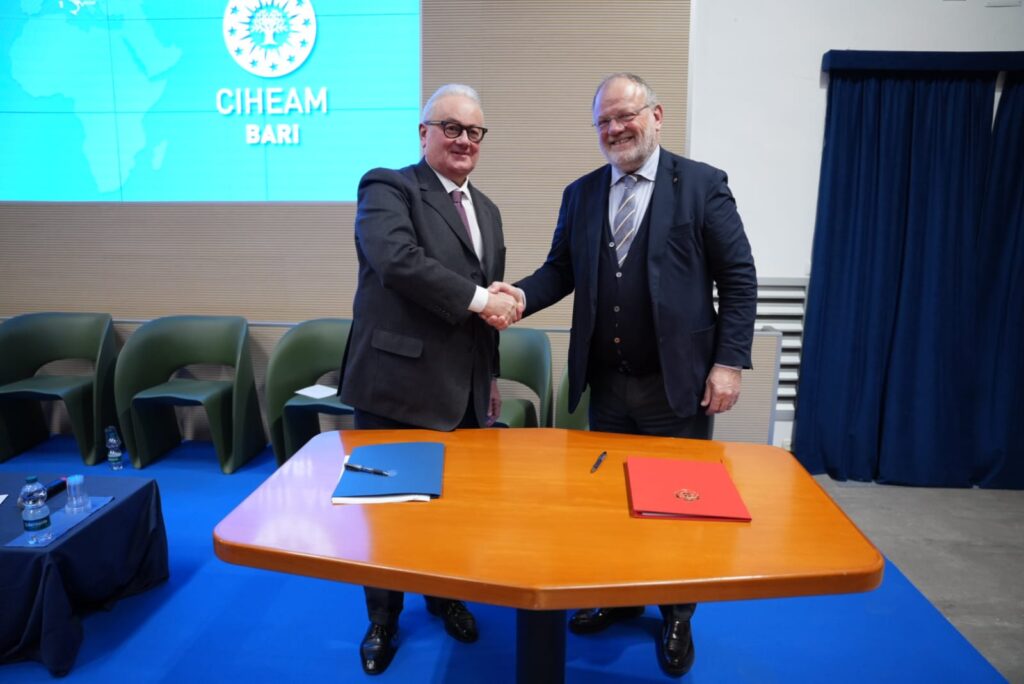
The day was also marked by the signing of a Memorandum of Understanding between the CIHEAM and the Sovereign Military Order of Malta, establishing a framework for joint activities in training, technical assistance, research, and scientific and diplomatic cooperation, in support of the implementation of the Sustainable Development Goals and the protection of human rights.
By closing this edition, the CIHEAM Bari reaffirmed a fundamental conviction: in today’s world, international cooperation cannot remain confined to emergency response. It must also be grounded in science, knowledge networks and capacity building, in order to turn data into decision-making and solidarity into lasting action.