
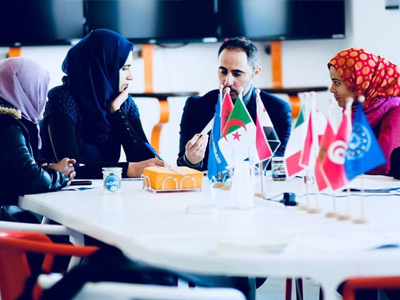

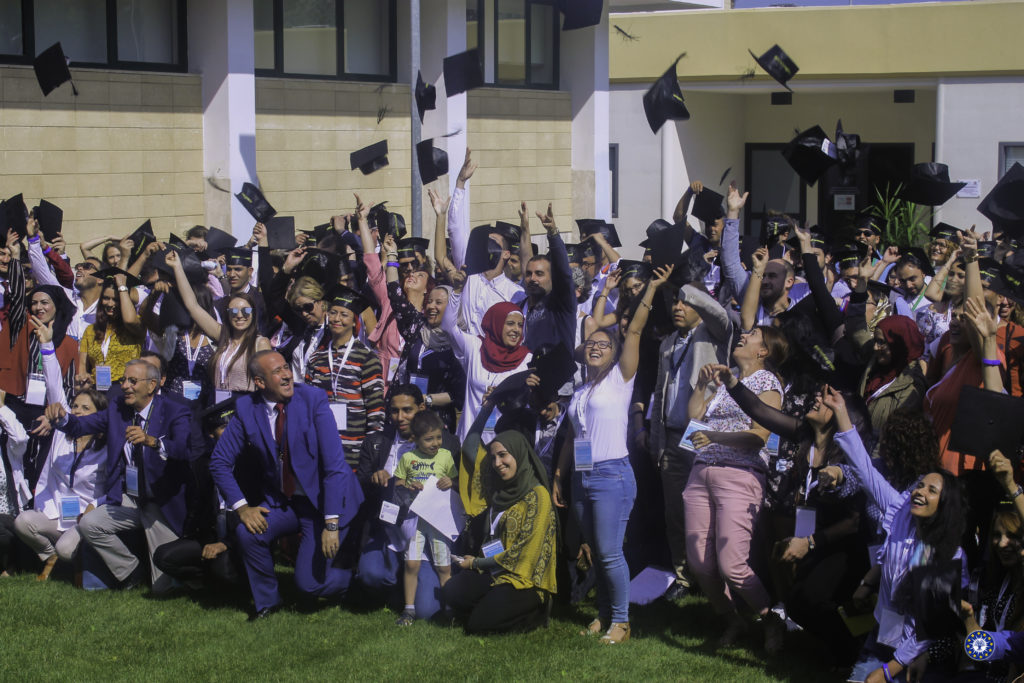
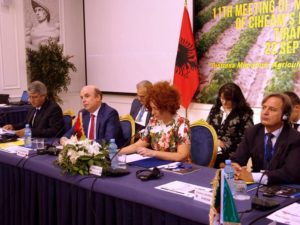
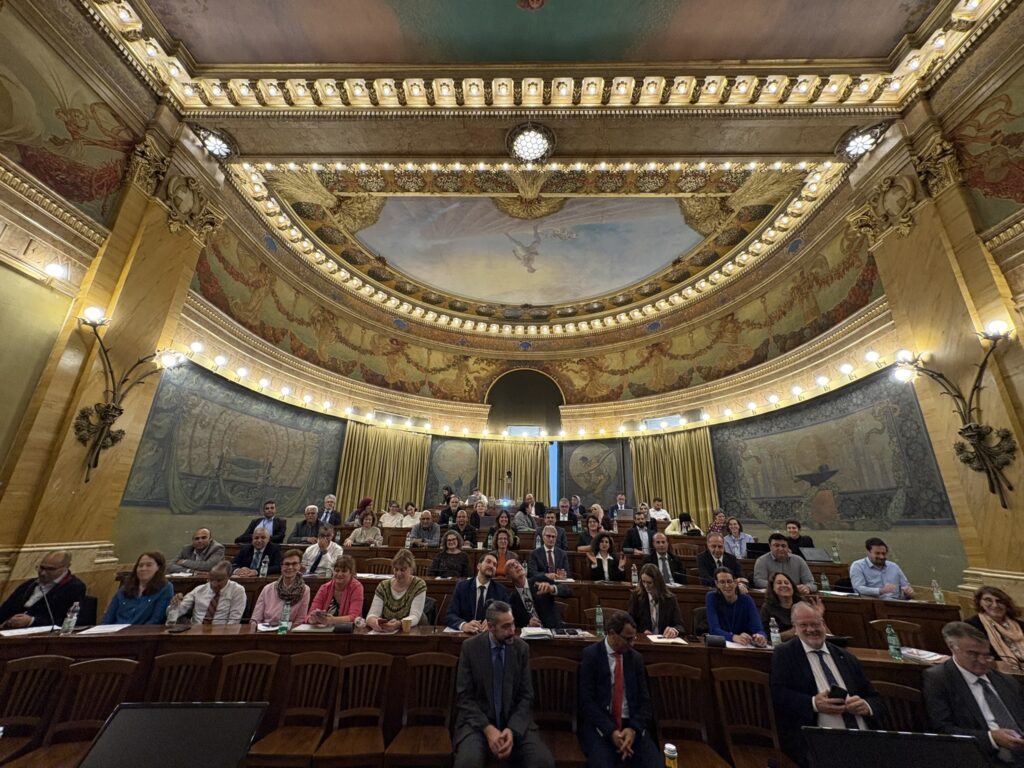
On the occasion of the first observance of the International Day of the Mediterranean Diet, CIHEAM brought together researchers, project partners and institutional colleagues at the Ministry of Agriculture, Food Sovereignty and Forests (MASAF) in Rome to discuss the Mediterranean Diet’s contribution to sustainable food systems and territorial development.
The meeting provided an opportunity to share experiences and identify practical ways to strengthen local agri-food systems, support rural communities and scale up innovative approaches across the Mediterranean.
Contributions from researchers and partners involved in the DIONYSUS and MOAN initiatives, alongside CIHEAM headquarters and institutes, highlighted experiences from different Mediterranean contexts, including Europe, the Balkans, the Middle East and North Africa.
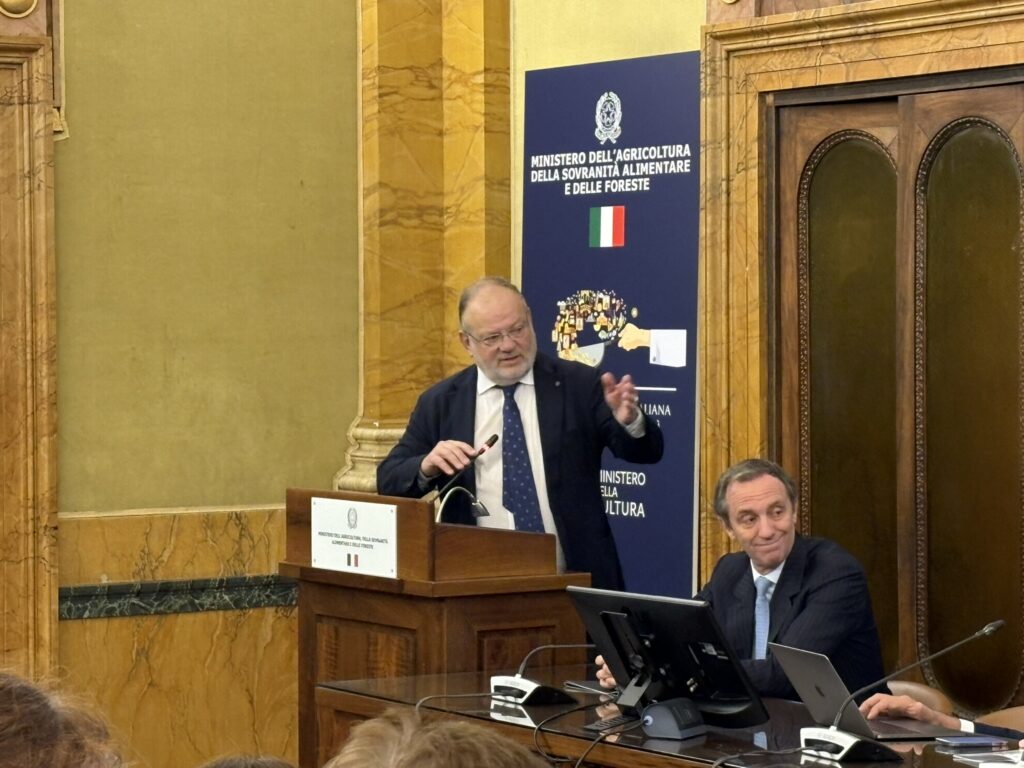
A key theme was the potential of bio-districts to support local development. By bringing together agriculture, tourism, food processing and cultural activities around a shared territorial strategy, these initiatives can help retain economic value in rural areas, strengthen local identities and address challenges such as rural depopulation.
The discussions also explored how to make the Mediterranean Diet more relevant to younger generations. Participants highlighted the importance of intergenerational knowledge-sharing, food education and practical cooking skills, as well as the need to reconnect people with local food traditions and markets.
Addressing the wider food environment was another central message. As Roberto Capone, CIHEAM's focal point for sustainable food systems and the Mediterranean Diet, emphasised: “We must focus on transforming the environment in which decisions are made. The real change is creating the conditions that make healthy choices possible.”
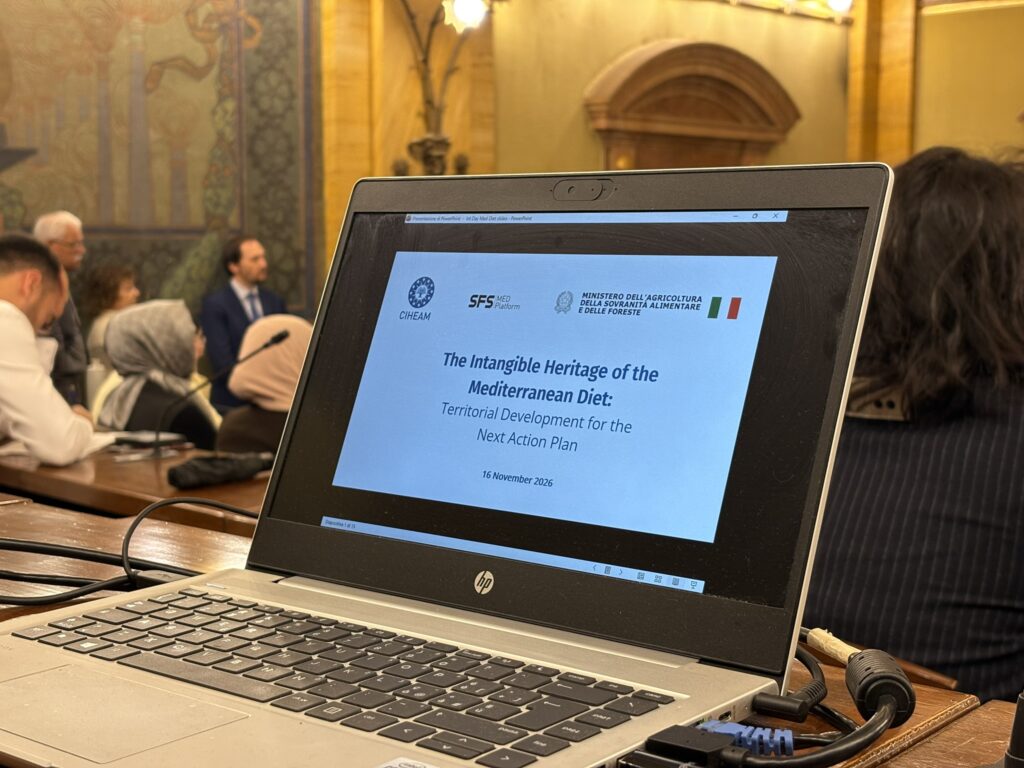
The meeting also featured contributions from Massimo Zaurrini, director of Africa e Affari, and Lluis Serra-Majem, Rector of the University of Las Palmas de Gran Canaria, who addressed the role of food environments and the importance of transmitting the Mediterranean Diet across generations.
The afternoon sessions brought together colleagues from the MOAN and DIONYSUS initiatives to share project findings and experiences.
Recognised by UNESCO as Intangible Cultural Heritage of Humanity in 2010, the Mediterranean Diet represents a shared heritage of knowledge, traditions and social practices. Through research, training and international cooperation, CIHEAM continues to promote its potential as a model for healthier, more sustainable and resilient Mediterranean food systems.
Further reading:
- A common action plan on sustainable food systems transformation in the community, 2026
- Sustainble food systems: Change of route in the Mediterranean, 2024
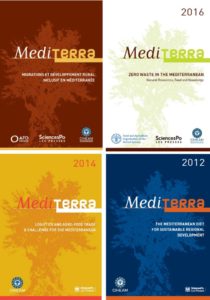
- Food systems transformation: Processes and pathways in the Mediterranean (A stocktaking exercise), 2021
- Updating the Mediterranean Diet Pyramid towards sustainability: Focus on environmental concerns, 2020