


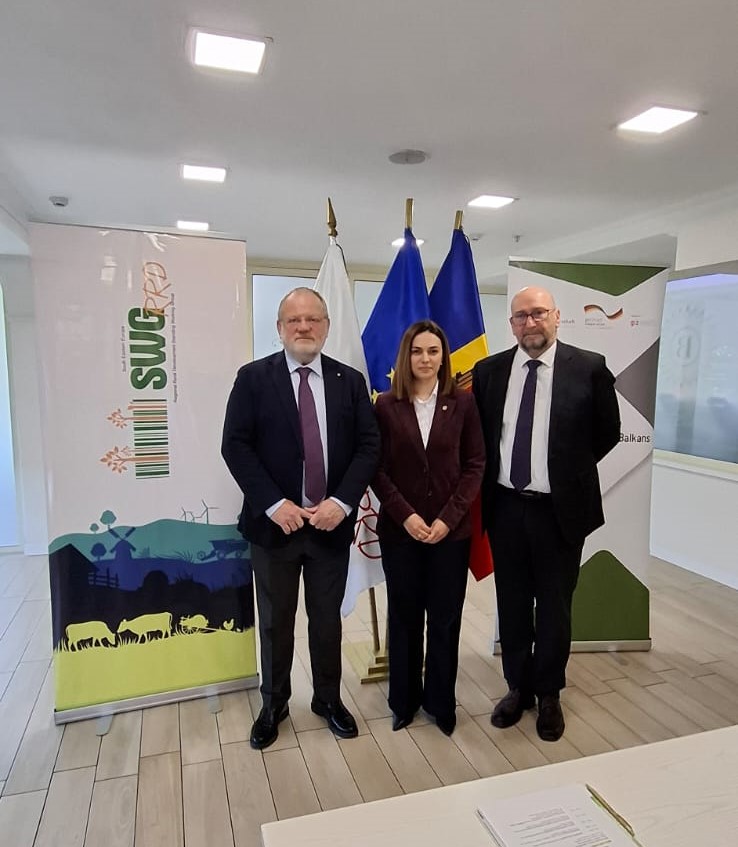
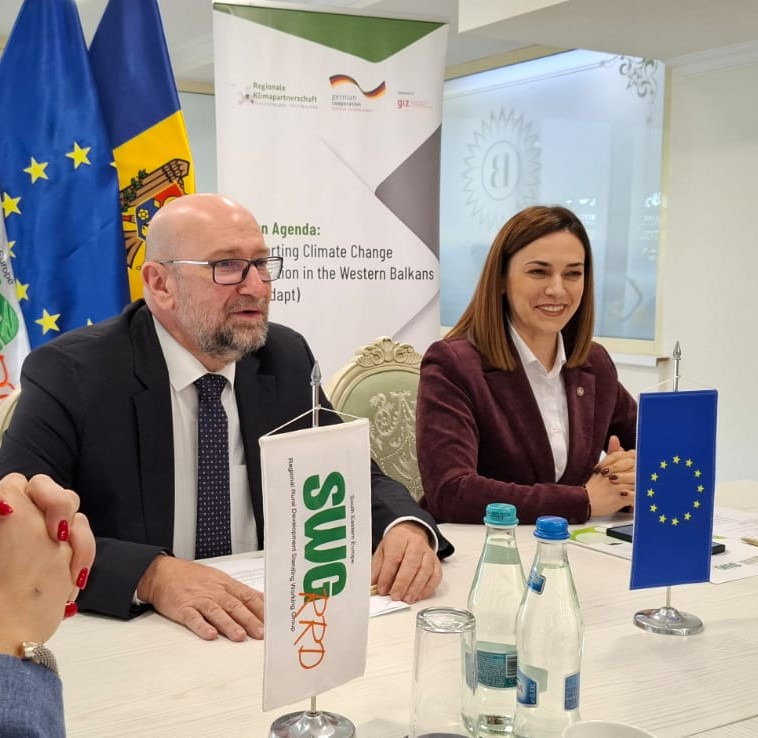
Chișinău, Republic of Moldova, 21 April 2026. The Secretary General of the CIHEAM, Teodoro Miano, addressed the 65th General Assembly of the Regional Rural Development Standing Working Group in South Eastern Europe (SWG RRD). His participation represents a step further towards closer alignment between the Euro-Mediterranean region and the Balkans, united by a shared ambition to strengthen agricultural, rural and territorial cooperation in response to contemporary challenges.
Advancing the implementation of the Memorandum of Understanding signed in February 2026
In his address, Mr Miano recalled the strategic significance of the Memorandum of Understanding signed in Paris last February between the CIHEAM and SWG RRD, in the presence of the CIHEAM President Frida Krifca and SWG RRD Secretary General Boban Ilic. Concluded for a period of five years, this agreement aims to intensify joint actions in the fields of agriculture, rural and economic development, environmental protection, as well as food safety and quality. By combining the CIHEAM’s long-standing expertise in the Mediterranean with the SWG RRD’s regional anchoring in South Eastern Europe, this partnership seeks to structure a genuine knowledge hub, in the service of rural territories, innovation and public policies.
Among the priorities reaffirmed during this General Assembly is the deepening of ties between the CIHEAM and the Balkan countries. The SWG RRD is expected to serve as a coordinating platform, facilitating this dynamic of integration and multilateral cooperation. This orientation is anchored in historical continuity: since its establishment in 1962, CIHEAM counted Yugoslavia among its founding member states. Today, the countries that emerged from this area remain natural partners in the Mediterranean dialogue.
Shared priorities for action on the ground
The two organizations expressed their determination to move beyond the institutional framework and deliver tangible results for rural populations. The areas of action envisaged include the development of scholarships for Balkan students, the creation of joint training programmes, the organization of study visits, and the identification and implementation of transnational projects. Particular attention will be given to youth, rural entrepreneurship and women’s empowerment, recognized as essential drivers of local economic transformation.
At the end of his speech, Teodoro Miano recalled the significance of this transregional cooperation: “The enlargement of CIHEAM to the Balkans is not only a growth in numbers; it is a growth in our collective strength and our shared hope for a prosperous, sustainable and peaceful region.”
Through this partnership, the CIHEAM reaffirms its role as a bridge between neighbouring regions, in the service of shared prosperity, food security and a field-based diplomacy grounded in knowledge and cooperation.