



The Italian Vice Minister of Foreign Affairs visits the CIHEAM and reaffirms his support for Mediterranean cooperation
Paris, 2 December 2025
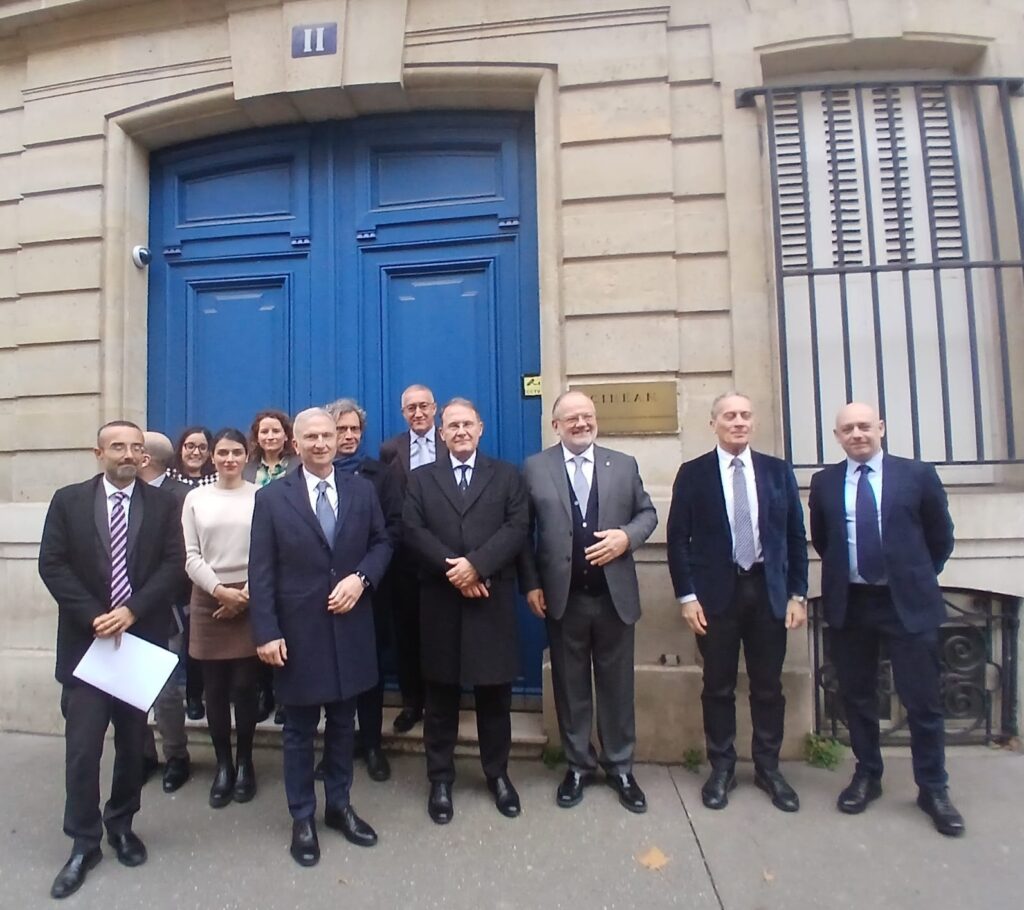
Following a working lunch with the Secretary General of the CIHEAM, Teodoro Miano, the Italian Vice Minister of Foreign Affairs and International Cooperation, Edmondo Cirielli, visited the CIHEAM Headquarters in Paris. He was accompanied by members of his cabinet, Ambassador Luca Sabbatucci, as well as representatives of the Permanent Delegation of Italy to international organisations.
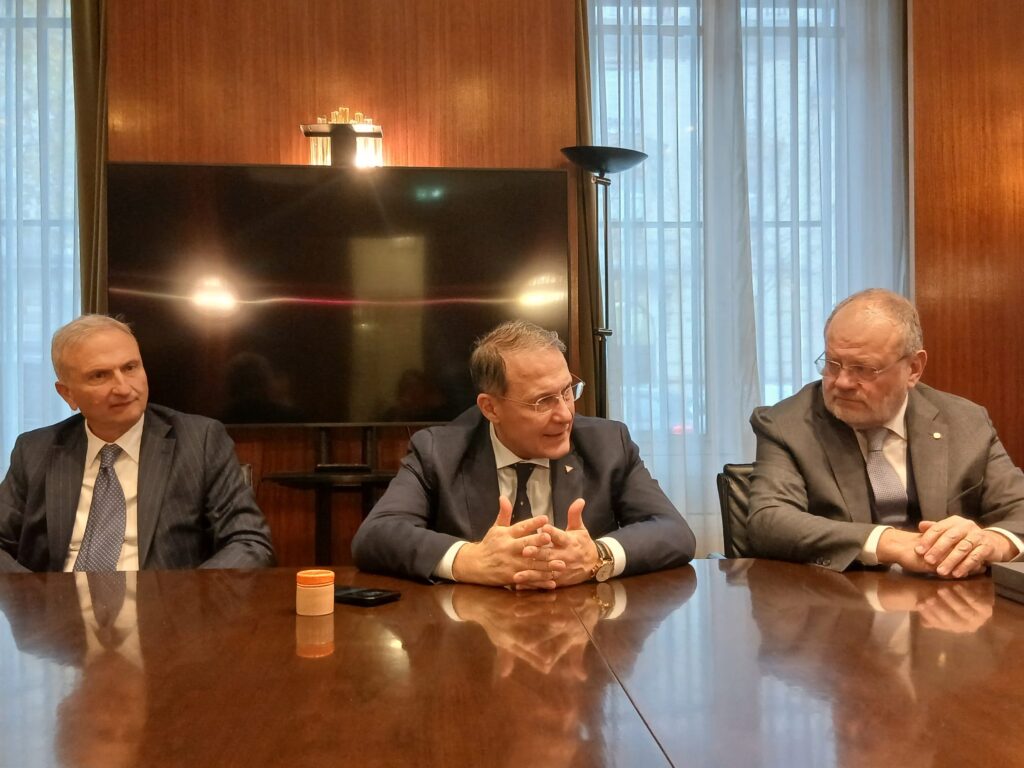
During the discussions, Vice Minister Cirielli highlighted the strategic role of the CIHEAM in Euro-Mediterranean cooperation, recalling that food systems and water governance have become central to the stability, prosperity and sustainable development of the region. He praised the ability of the Organisation to connect scientific research, capacity-building and public policy, in order to respond to the challenges posed by climate change, supply chain tensions, social disparities and demographic pressures.
The Vice Minister expressed the renewed support of the Farnesina for the upcoming CIHEAM Ministerial Meeting of Agriculture, which will be held in Rome in autumn 2026. He stressed that this intergovernmental meeting will be a decisive moment to consolidate cooperation in the face of the region’s agri-food and water challenges, and to place these priorities at the heart of Mediterranean security and development policies.
Discussions also addressed the prospects for the CIHEAM’s enlargement to new Member States, particularly in the Balkans, where many agricultural and rural realities present challenges similar to those of Mediterranean countries. Mr Cirielli noted that the gradual integration of these countries would strenghten regional cohesion and foster joint responses based on shared experience, scientific cooperation and investment in local development.
The visit of the Vice Minister confirmed the role of the CIHEAM as a key institutional partner, capable of facilitating dialogue between governments, experts and rural communities, and of representing the voice of Mediterranean agriculture in international diplomatic forums. It reaffirmed that the future of the region will depend on the collective ability to make food security, water management and agricultural cooperation permanent political priorities rather than short-term issues.