


Arab Food and Water Security
Cairo, Egypt, 5 October 2026
In a region where water scarcity, climate change, and increasing pressures on agricultural systems are closely intertwined, food and water security requires responses that transcend national borders and sectoral approaches. These shared challenges were at the heart of the launch of the 14th Arab Cultural Development Report, entitled “Food and Water Security in the Arab World: Accumulated Crises and Promising Initiatives ,” organized by the Arab Thought Foundation , in cooperation with the League of Arab States, at its headquarters in Cairo.
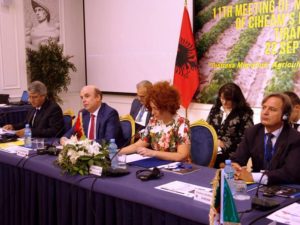
Held under the high patronage of HE Nabil Fahmy, Secretary General of the League of Arab States, this meeting brought together political leaders, scientists and representatives of regional and international organizations to reflect on how scientific knowledge, regional solidarity and sustainable cooperation can contribute to strengthening the resilience of food and water systems.
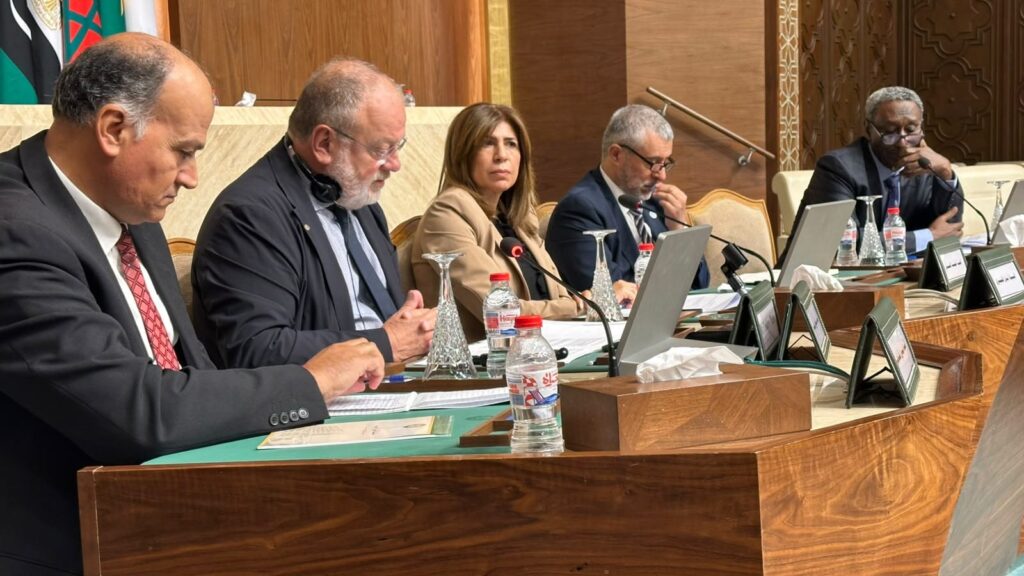
CIHEAM contributed to this collective reflection through the participation of its Secretary General, Teodoro Miano, and the scientific engagement of Professor Mouin Hamze, lead scientific editor of the report, highlighting the importance of connecting research, policy dialogue and practical cooperation.
From shared challenges to collective solutions
For the Mediterranean, the interdependence of water, agriculture, energy and ecosystems is not merely a matter of scientific understanding. It is increasingly a question of how knowledge can inform policies, guide investment and deliver tangible benefits for territories and communities.
This perspective informed Teodoro Miano's contribution to the dialogue on Arab integration and international cooperation, drawing on CIHEAM's longstanding partnerships with Arab countries to explore new avenues of Euro-Mediterranean cooperation.
Moving from integrated approaches to concrete action requires more sustainable water management, including non-conventional water reuse, proactive drought and groundwater governance, and stronger institutional capacities. It also calls for more reciprocal partnerships, recognising the complementary expertise of Mediterranean countries and creating the conditions for responsible investment and locally adapted solutions.
Science and knowledge at the heart of regional cooperation
The report also reflects the wealth of expertise brought together to address food and water security challenges in the Arab world. Professor Mouin Hamze, a specialist in agricultural research and innovation policies, served as its scientific co-editor alongside Omar Bizri. He also contributed to the analysis of contemporary food security challenges and the opportunities offered by smart agriculture.
Several members of the CIHEAM community also contributed to this collective publication. Sébastien Abis examines global transformations in agricultural and food systems, while Mohamed Sadiki explores Morocco’s food and water security challenges. Roula Khadra focuses on the sustainable management of water resources in the Arab world, and Teodoro Miano sheds light on urban food waste and the need for more efficient resource use.
Beyond the diversity of national contexts, Arab and European Mediterranean countries share a profound interdependence when it comes to natural resources, agricultural development and food systems. Through its longstanding partnerships, education, research and cooperation activities, CIHEAM continues to encourage a shared Mediterranean response, building on existing collaboration and expertise to advance more resilient, inclusive and sustainable agrifood systems.
Report "Arab Food and Water Security: Accumulated Crises and Promising Initiatives" (ARABIC Version)

Download